The 21st of March! That’s late for me. Normally, I’d be diving throughout the winter, but after a prolonged season of wet dives, I decided I needed a new drysuit. So I waited for that to arrive before heading back into the water. Although the sea doesn’t reach its coldest until around this time of year, the air temperature through the winter would have been unpleasant while wet. So, a March dive was the perfect opportunity to test out the new suit, and I’m very pleased to say I stayed dry throughout.
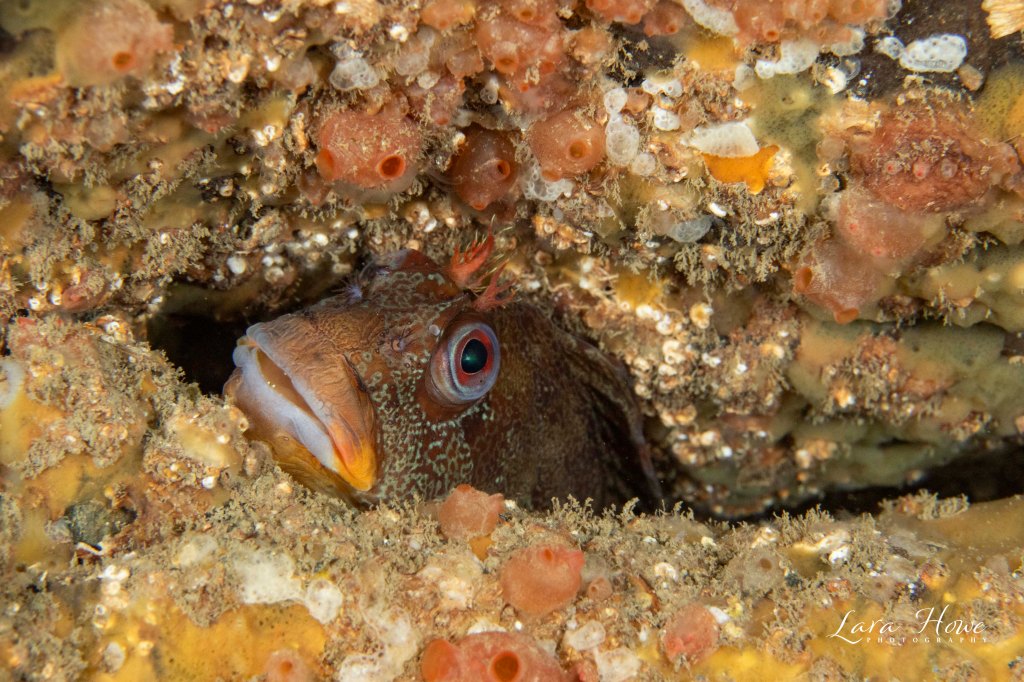
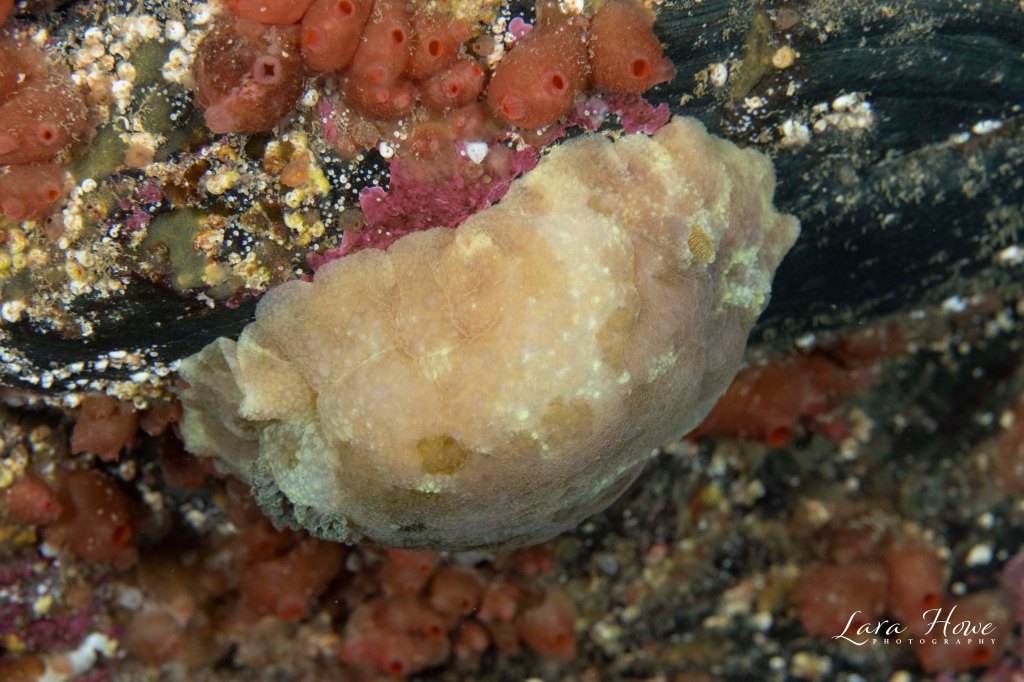
A tompot blenny (Parablennius gattorugine) and a sea lemon (Doris pseudoargus).
That meant I had time to focus on taking photographs. I was a bit rusty, having not been in the water for a couple of months, I literally had to dust the housing off! There’s always the dilemma of which lens to use for each dive, macro or wide angle, especially at the Sugarloaf Caves. With the visibility not being the best, the macro lens was my choice. However, as we entered the Cave of the Birds, I began to regret not bringing the wide angle.
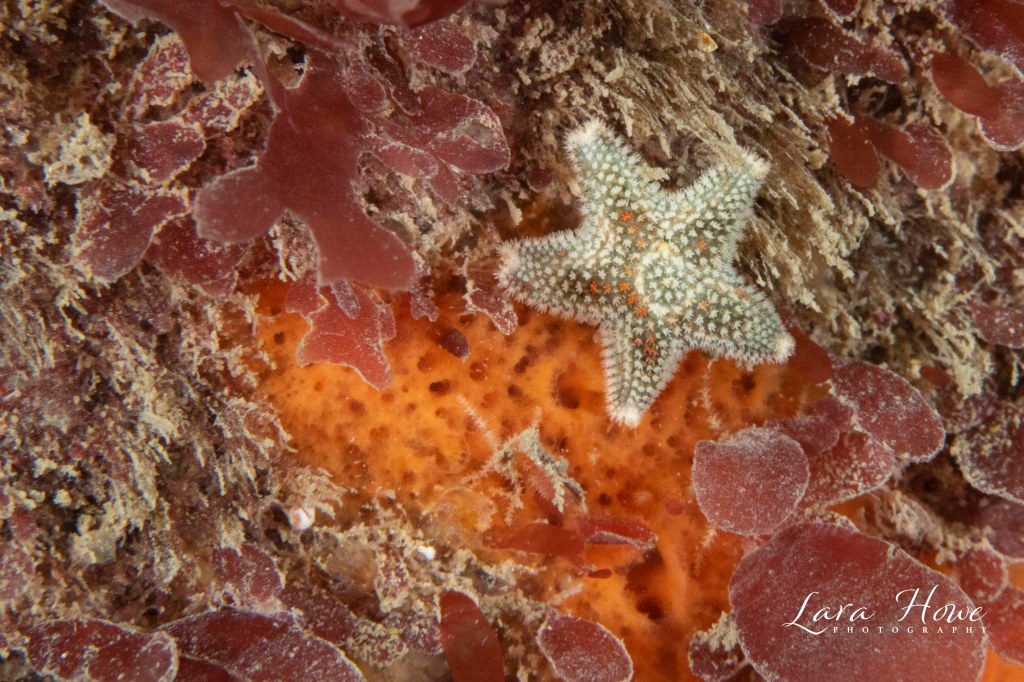
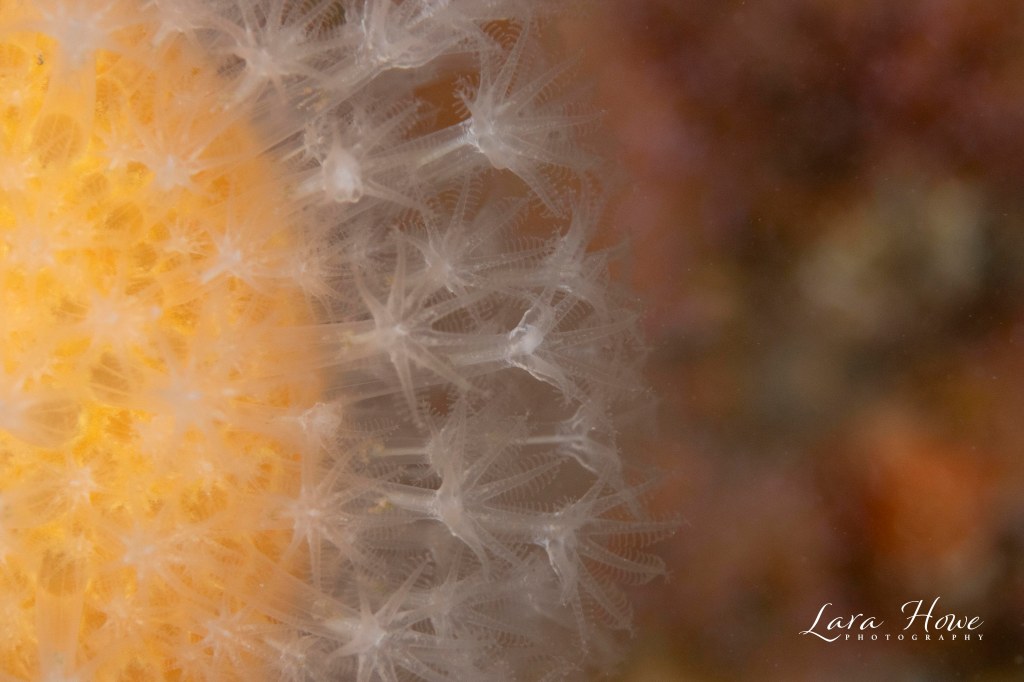
A Cushion star (Asterina spp) and a close of of dead men’s fingers (Alcyonium digitatum).
Conditions were great: sunny and calm. You can’t ask for much more than that, well, no current, but you can’t have everything. The site, known as the Sugarloaf Caves, consists of two caves, the V Cave and the Cave of the Birds, and a swim-through cave called Fairy Hall, which brings you out at the base of the Sugarloaf, a sea stack used by nesting seabirds during the summer.
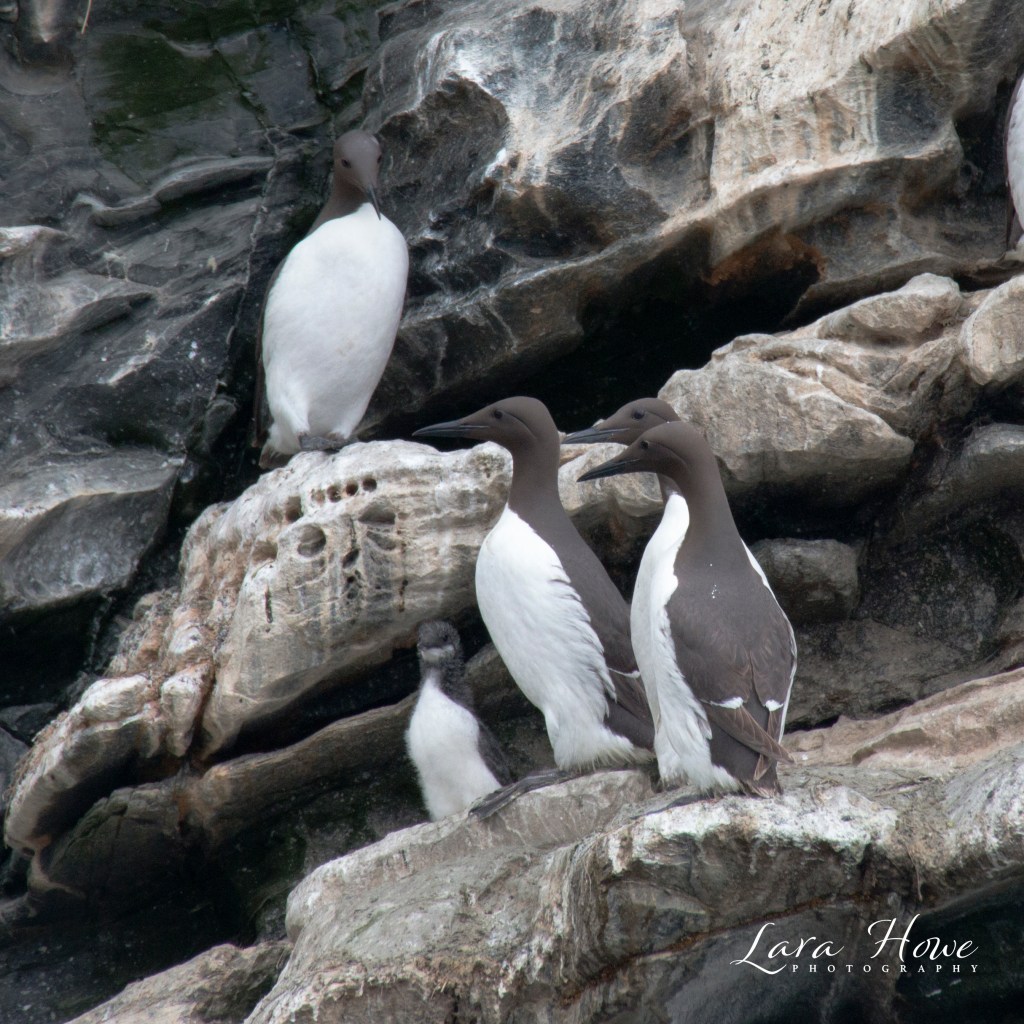
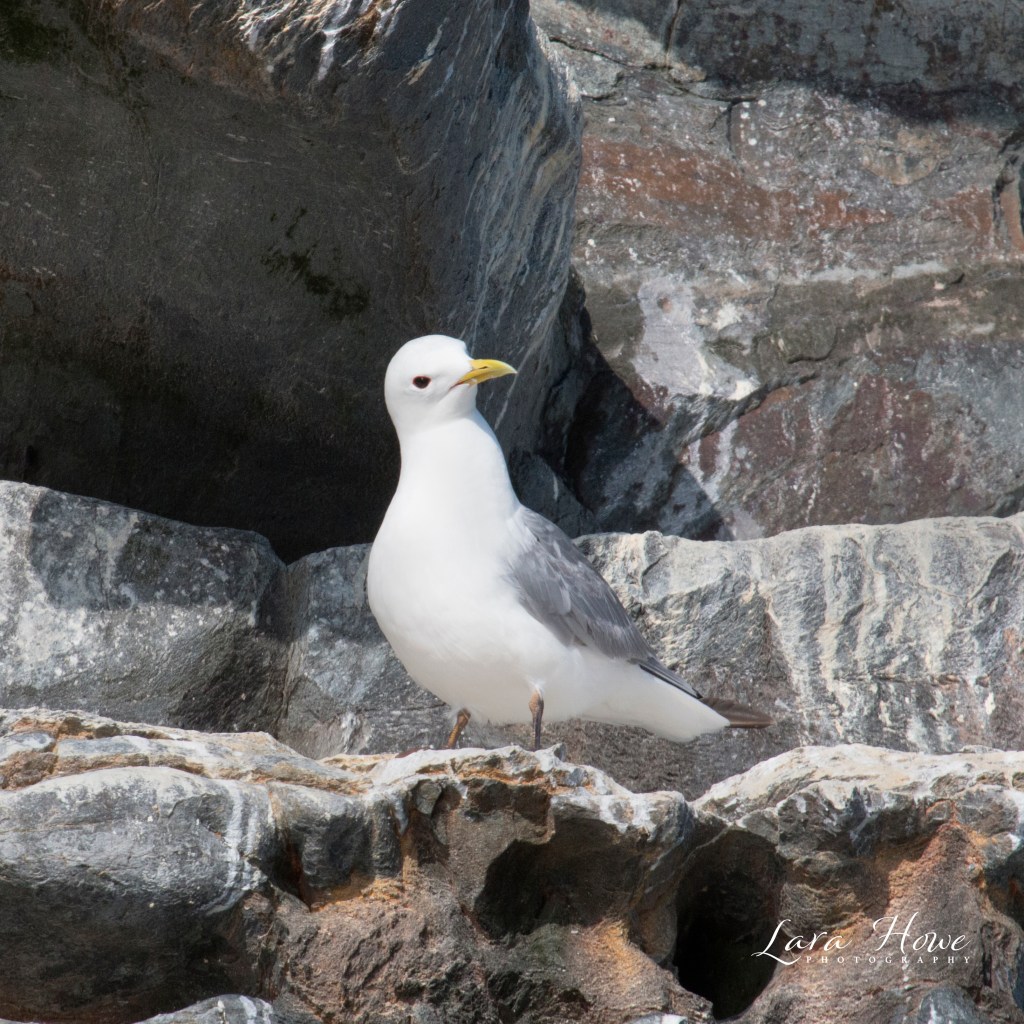
Guillemots (Uria aalge) and Kittiwakes (Rissa tridactyla).
This site is great for both macro and wide angle, but with the recent windy weather, I opted for macro. There is always so much to photograph in the caves that you might never move more than a few yards! However, you also want to see it all – well, at least I do. The bottom of the caves is made up of scoured cobbles, and the lower half metre or so is barren. But once above the scour line, life abounds with so much colour. Every square inch is covered in sponges, ascidians, nudibranchs, anemones, worms, fish, soft corals, and more.
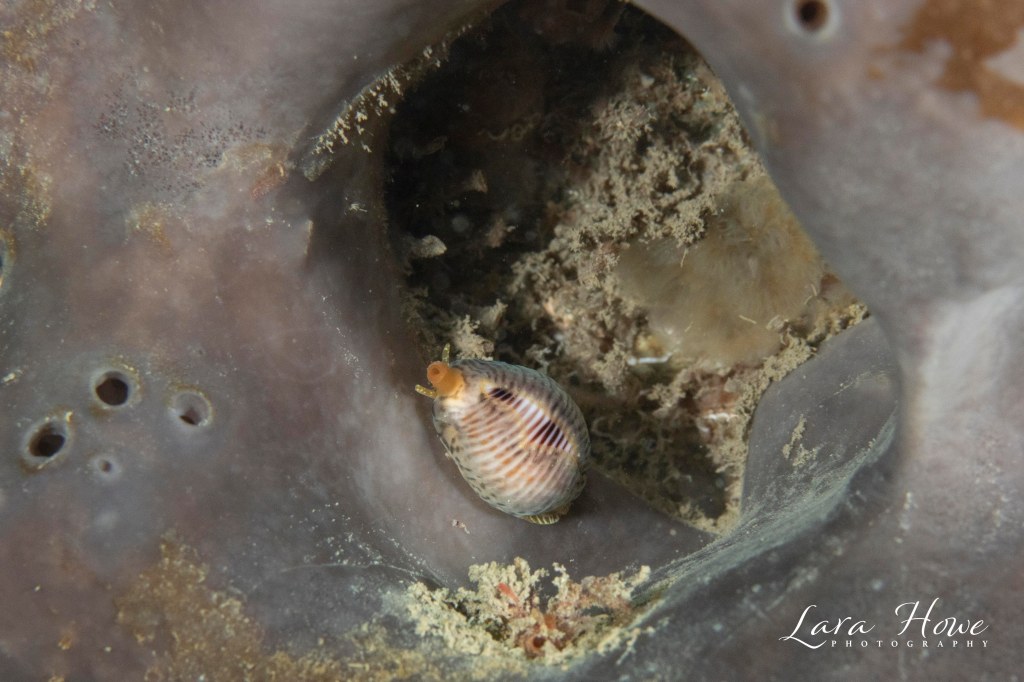
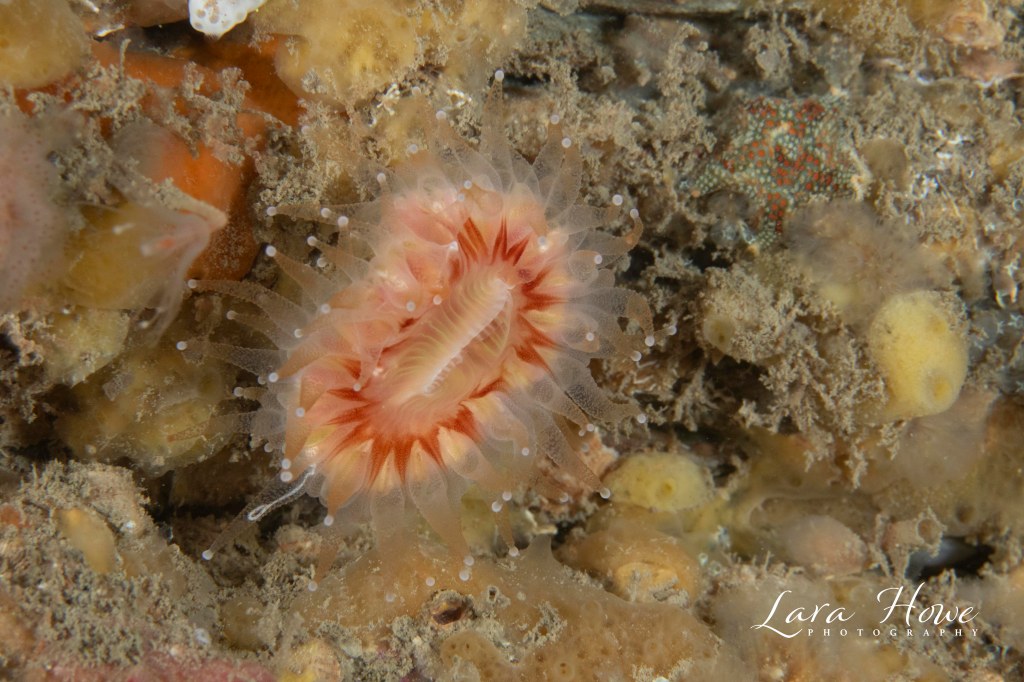
A spotted cowrie (Trivia monacha) in Elephant hide sponge and a devonshire cup-coral (Caryophyllia smithii).
We started in the Cave of the Birds, which is always a great morning dive, with light streaming directly into the cave and this morning it delivered. This is where I really wished I’d had my wide-angle lens. The light rays penetrating down from the surface into the cave were spectacular. The visibility wasn’t brilliant, but it was still beautiful. I just needed to position my buddy at the cave entrance for that classic shot but sadly, not this time. The macro life more than made up for it.
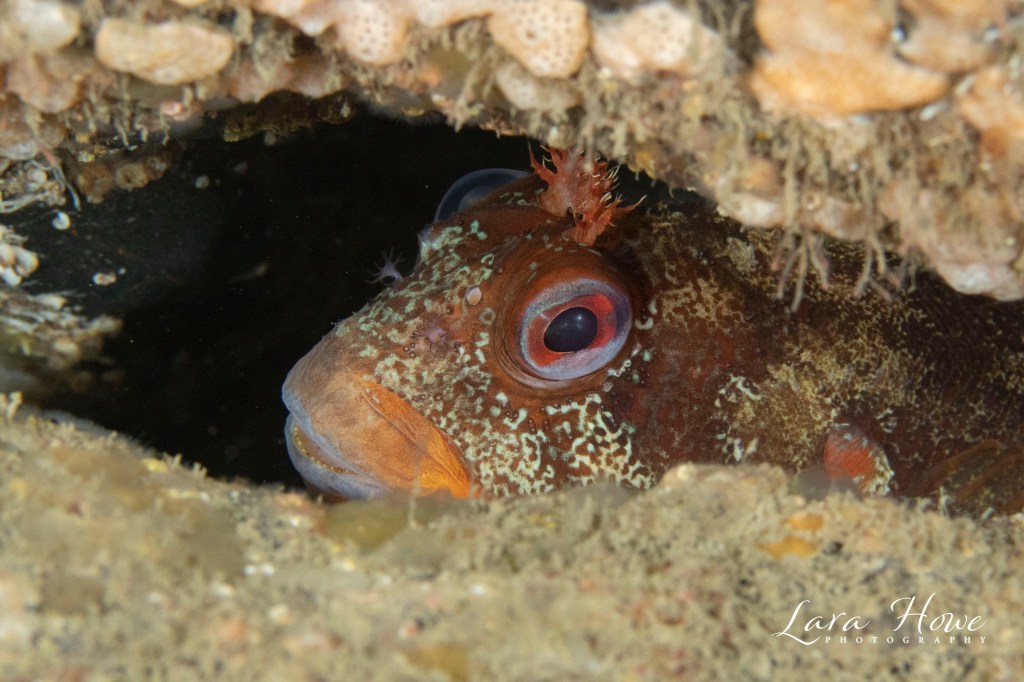
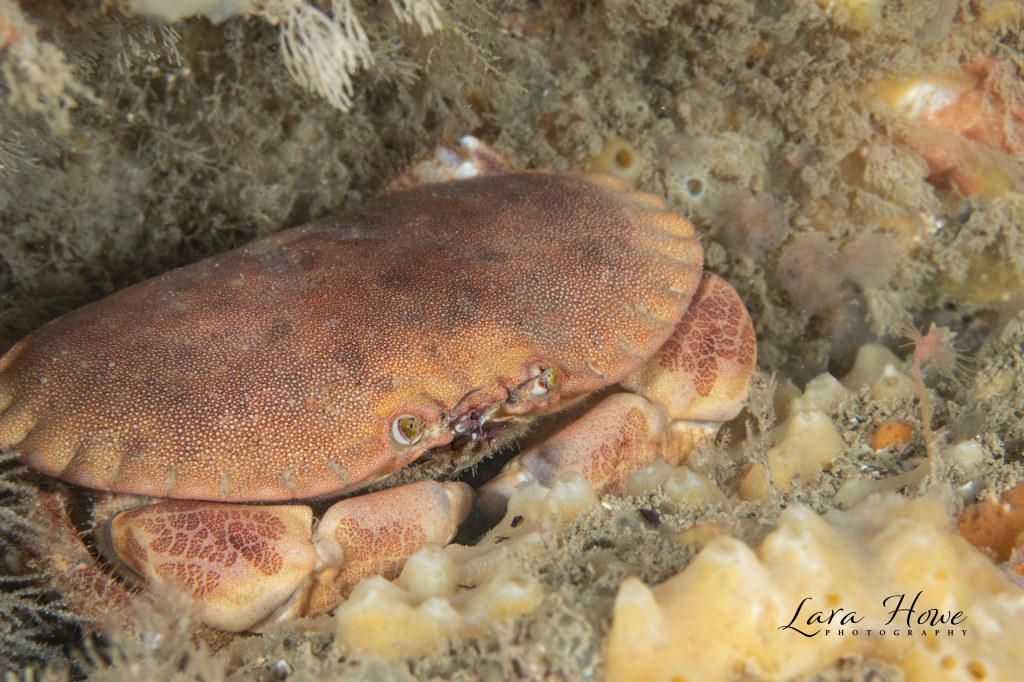
Second Tompot blenny (Parablennius gattorugine) and an Edible crab (Cancer pagarus).
One of the first things I saw was a tompot blenny hiding in a crevice, just poking its head out enough for a photo. Such a cute little fish, and generally very obliging for photographs. Then there was all the squidgy, encrusting life along the walls; sponges, ascidians, anemones, corals, all so beautiful. You could dive this site every day for a year and still see something new each time.
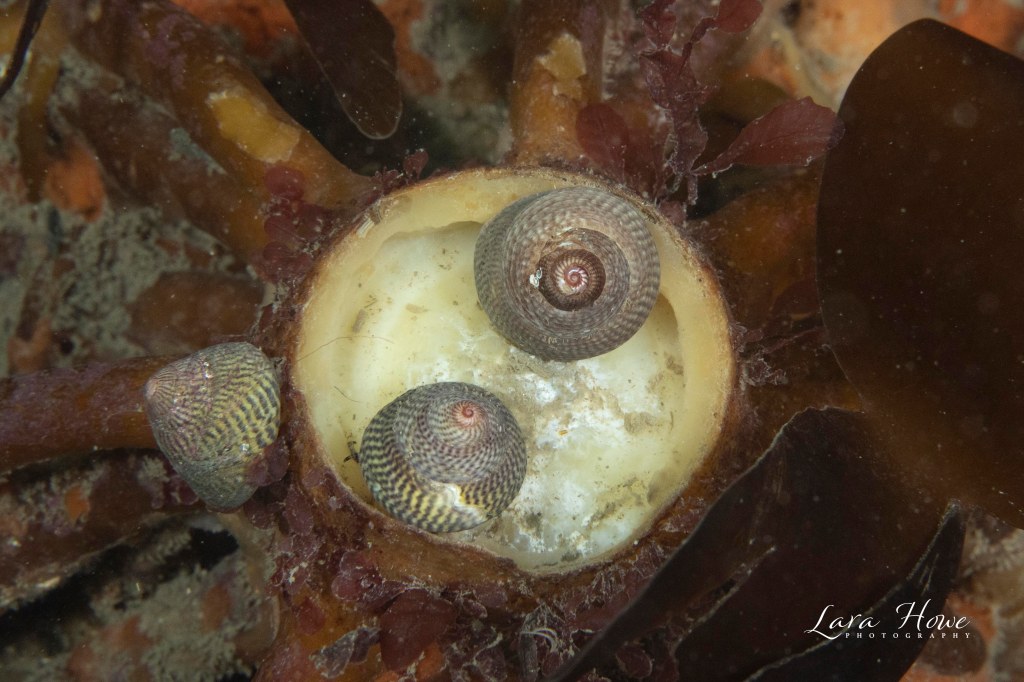
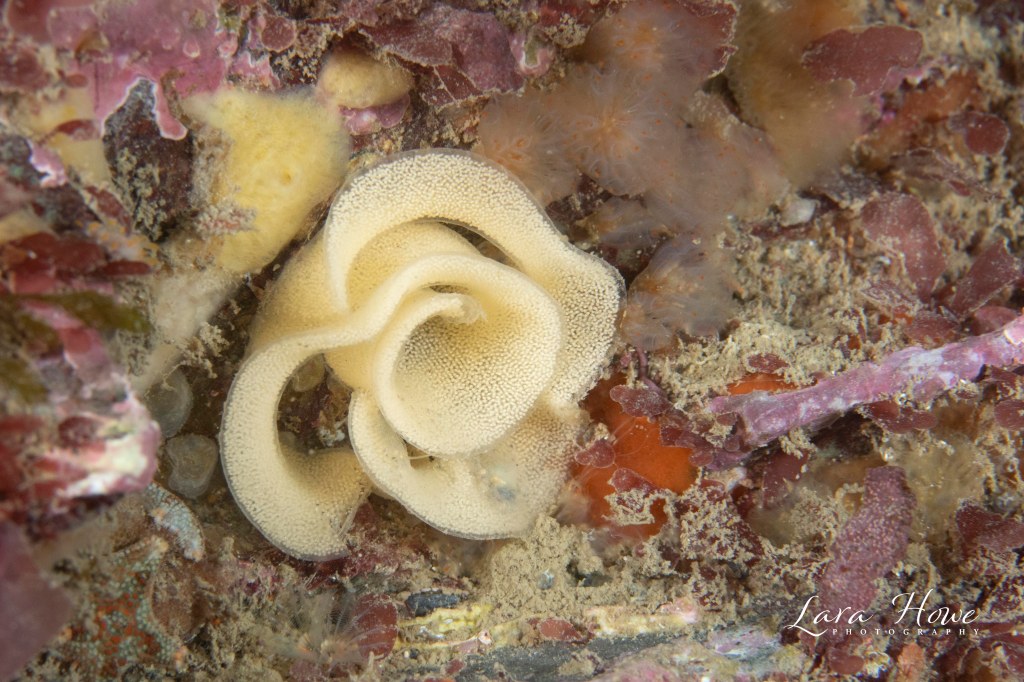
Grey topshells (Steromphala cineraria) and nudibranch egg case.
Once we had explored to the back of the cave, we headed off behind the Anvil, a small sea stack, and into Fairy Hall. There was some current running through the first section, which meant I didn’t get to take any photos, it was just a blur of colour passing by. However, the second half of the swim-through opens up more, and the current slowed enough for us to take some photographs. Again, the walls here are teeming with life. One highlight is the pink sea fingers, Alcyonium hibernicum. This is a pale pink soft coral and the caves are one of the few places around the island where you can see them, mostly recorded in the south. Very pretty animals indeed.
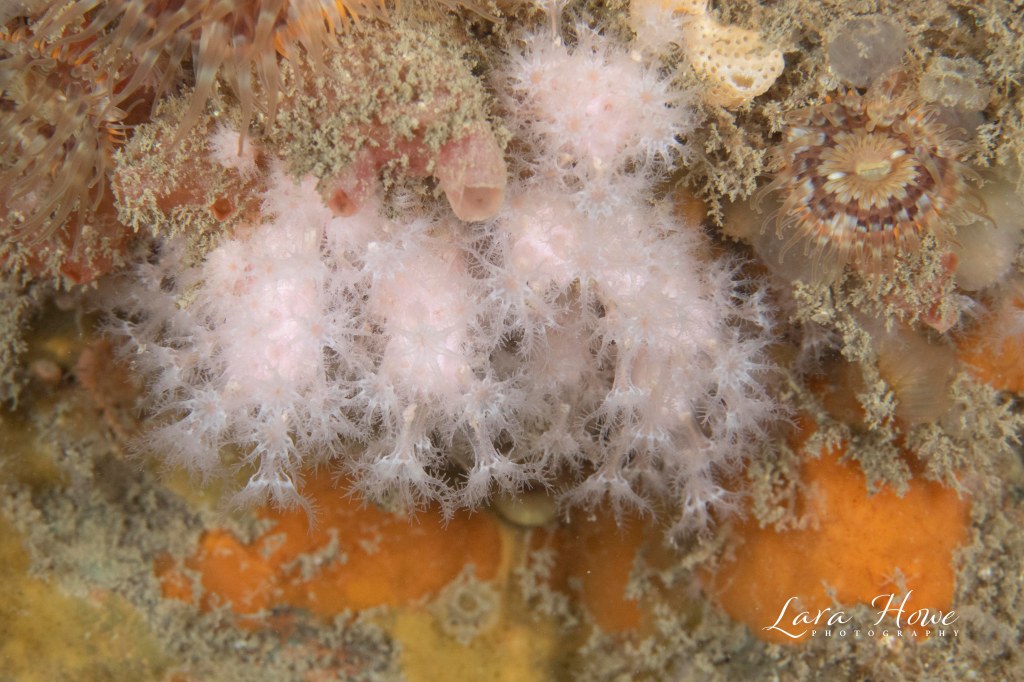
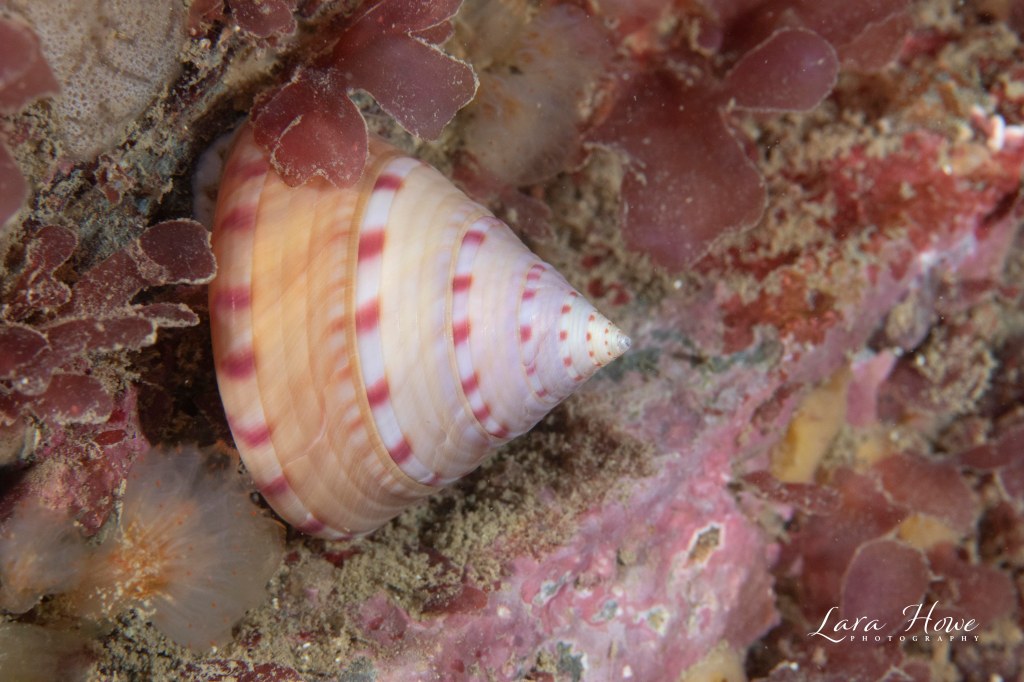
Pink sea finger (Alcyonium hibernicum) and a Painted topshell (Calliostoma zizyphinum).
Although I was dry, I was definitely getting cold by now, with the water temperature a balmy 9°C. So I exited the caves after an hour and returned to the RIB. It was a great dive, ending with sea animals chocolates – a fitting end to a great morning out on the water, and under it, of course.
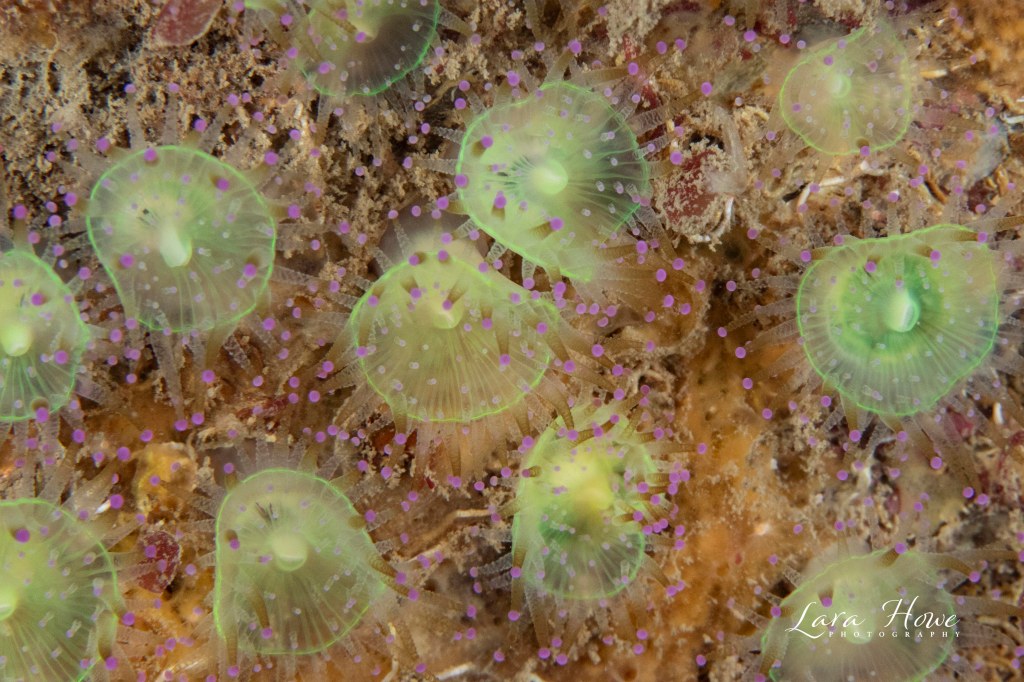
Jewel anemones (Corynactis viridis).

